
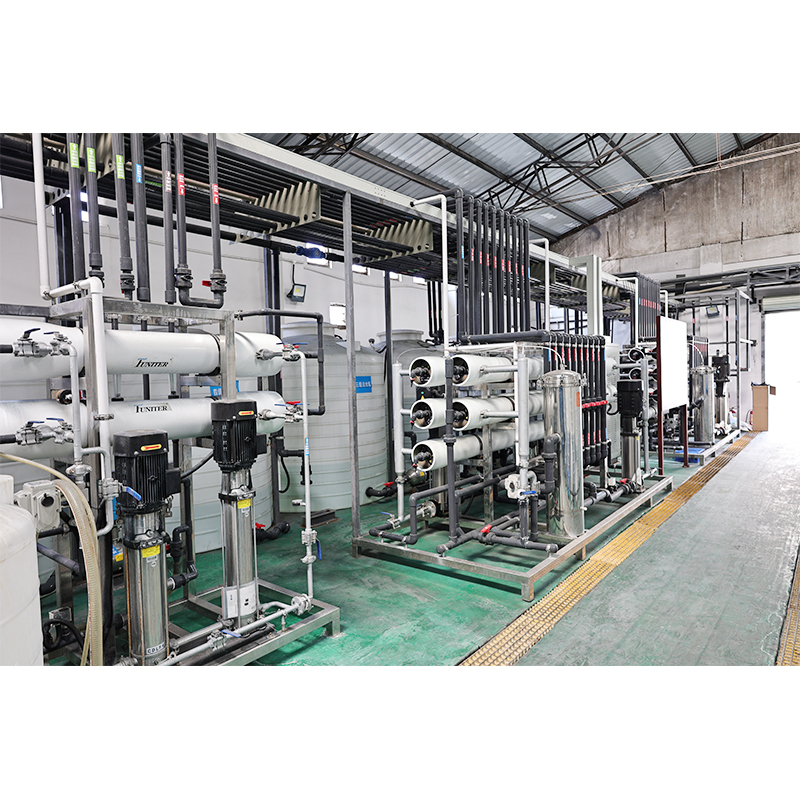
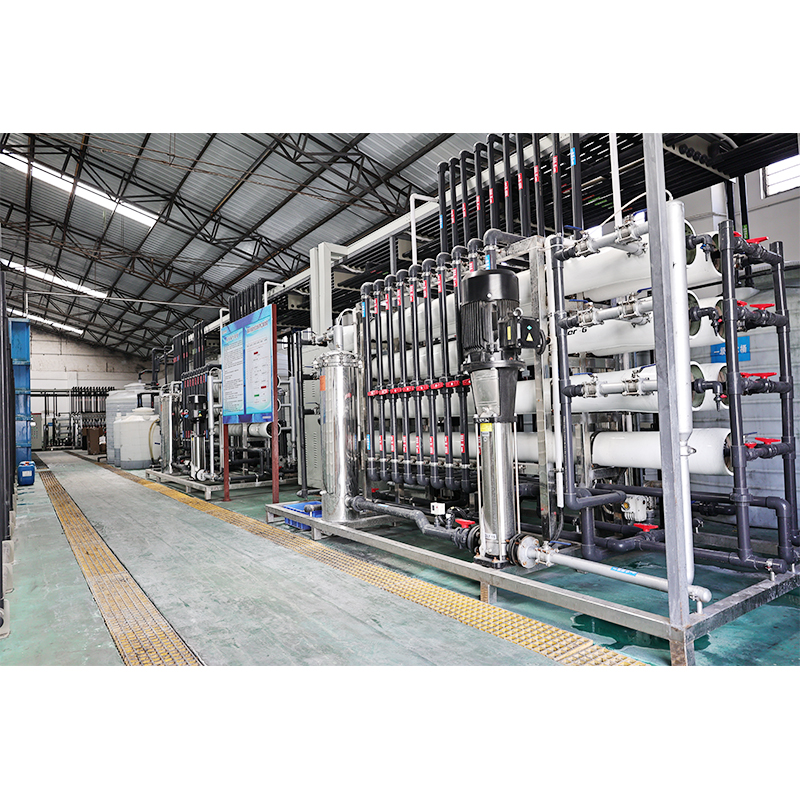
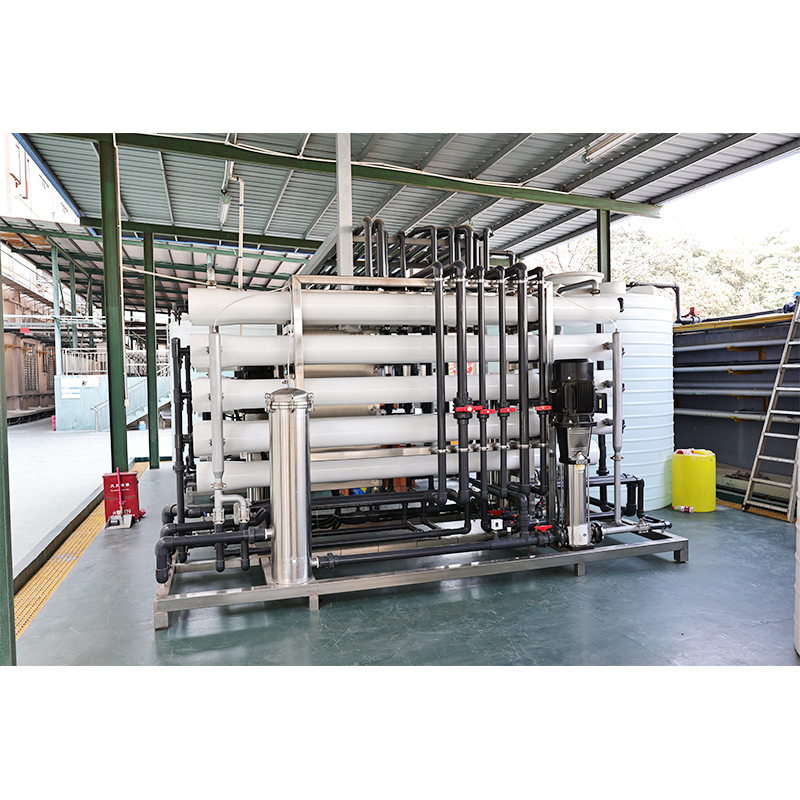
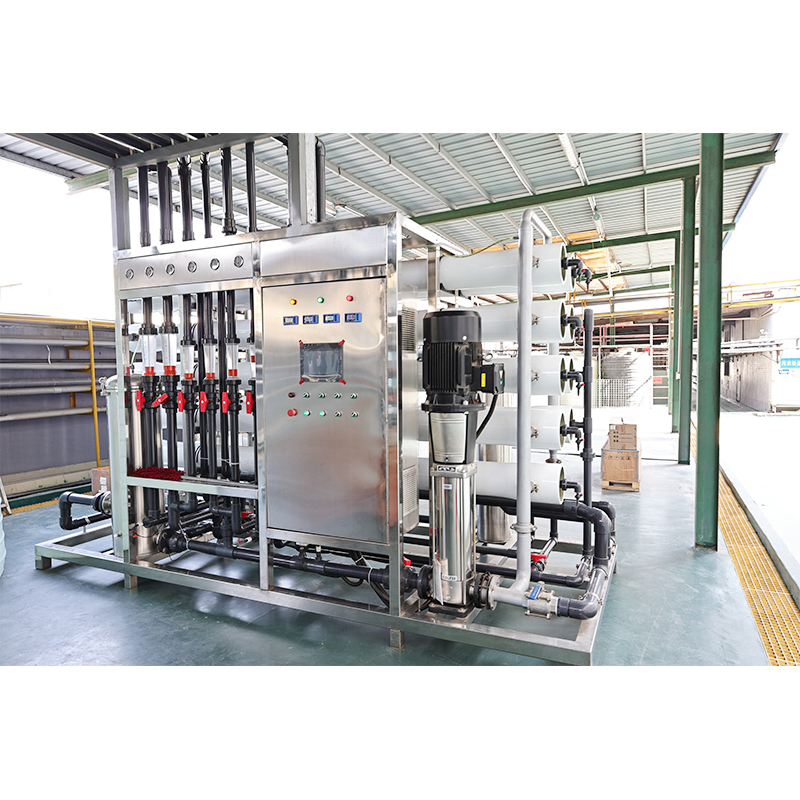


How can sea water industrial RO membrane increase water production and reduce system energy consumption?
Release Time : 2026-01-19
Against the backdrop of increasingly scarce global water resources, seawater desalination has become a key technological path to alleviate freshwater shortages. As a core component of this technology, the performance of sea water industrial RO membrane directly determines the system's efficiency, cost, and sustainability. In recent years, a new generation of seawater reverse osmosis membranes based on polyamide composite materials has achieved a synergistic breakthrough in significantly increasing water production and substantially reducing system energy consumption through dual innovations in materials science and engineering structure, providing solid support for efficient and economical seawater desalination.
1. Material Innovation: Ultra-thin High-flux Polyamide Separation Layer
Traditional reverse osmosis membranes often struggle to balance high desalination rates and high water flux—increasing flux easily leads to salt leakage, while pursuing high desalination sacrifices water production efficiency. The new generation of industrial RO membranes for seawater employs advanced interfacial polymerization technology to construct a thinner, denser, and more uniformly pore-sized polyamide separation layer on a porous support layer. This nanoscale functional layer not only maintains a high desalination rate of over 99.7% but also significantly reduces the resistance to water molecule permeation. Furthermore, by introducing hydrophilic monomers or nano-additives, the wettability of the membrane surface is improved, allowing water molecules to be more easily adsorbed and quickly pass through the membrane structure, thus achieving higher permeate flow rate under the same operating pressure. Experiments show that the optimized membrane element can increase the permeate flow rate per unit area by 15%–25% compared to the previous generation at an operating pressure of 55–60 bar. This means that in a desalination plant of the same scale, the required membrane area is reduced, and equipment investment is consequently lower.
2. Element Structure Optimization: High-Efficiency Flow Channel and Low Concentration Polarization Design
The increase in permeate flow rate depends not only on the membrane material itself but also on the precise design of the internal fluid dynamics of the membrane element. Modern seawater reverse osmosis membrane elements generally adopt a wide flow channel and high-turbulence feed grid structure, effectively enhancing water flow disturbance and reducing concentration polarization—that is, salt accumulation on the membrane surface forming a "boundary layer" that hinders water flux and accelerates scaling. Simultaneously, the new central tube and end cap sealing structure optimizes pressure distribution, ensuring uniform stress throughout the membrane roll and avoiding localized high pressure or dead zones. Some high-end products also employ a gradient flow channel design, making the pressure gradient of the feed water along the membrane length smoother, further improving the overall water recovery rate and energy utilization efficiency.
3. Low Operating Pressure: The Core Driver of Energy Saving and Consumption Reduction
Due to increased material flux and reduced flow channel resistance, the new generation of seawater reverse osmosis membranes can maintain high water production performance at lower operating pressures. Traditional seawater desalination systems typically require 60–80 bar pressure, while the optimized membrane system can operate stably at 50–60 bar. This not only directly reduces electricity costs but also alleviates the load on high-pressure pumps, pipelines, and valves, extending equipment life, reducing maintenance frequency, and further improving the long-term economic efficiency and stability of the system.
4. Multi-Scenario Adaptability: Efficient Reuse from Seawater to Industrial Wastewater
Sea water industrial RO membrane, through nanoscale precise control of polyamide materials and systematic optimization of membrane element fluid structure, have successfully broken through the traditional bottlenecks of "high desalination inevitably leading to low flux, and high water production inevitably leading to high energy consumption." They not only increase freshwater production per unit time but also drive an energy efficiency revolution in the entire desalination system with lower operating pressure. Driven by both carbon and water resource security goals, this type of high-efficiency, low-consumption, and stable reverse osmosis membrane is becoming an indispensable green engine in the blue economy era.
1. Material Innovation: Ultra-thin High-flux Polyamide Separation Layer
Traditional reverse osmosis membranes often struggle to balance high desalination rates and high water flux—increasing flux easily leads to salt leakage, while pursuing high desalination sacrifices water production efficiency. The new generation of industrial RO membranes for seawater employs advanced interfacial polymerization technology to construct a thinner, denser, and more uniformly pore-sized polyamide separation layer on a porous support layer. This nanoscale functional layer not only maintains a high desalination rate of over 99.7% but also significantly reduces the resistance to water molecule permeation. Furthermore, by introducing hydrophilic monomers or nano-additives, the wettability of the membrane surface is improved, allowing water molecules to be more easily adsorbed and quickly pass through the membrane structure, thus achieving higher permeate flow rate under the same operating pressure. Experiments show that the optimized membrane element can increase the permeate flow rate per unit area by 15%–25% compared to the previous generation at an operating pressure of 55–60 bar. This means that in a desalination plant of the same scale, the required membrane area is reduced, and equipment investment is consequently lower.
2. Element Structure Optimization: High-Efficiency Flow Channel and Low Concentration Polarization Design
The increase in permeate flow rate depends not only on the membrane material itself but also on the precise design of the internal fluid dynamics of the membrane element. Modern seawater reverse osmosis membrane elements generally adopt a wide flow channel and high-turbulence feed grid structure, effectively enhancing water flow disturbance and reducing concentration polarization—that is, salt accumulation on the membrane surface forming a "boundary layer" that hinders water flux and accelerates scaling. Simultaneously, the new central tube and end cap sealing structure optimizes pressure distribution, ensuring uniform stress throughout the membrane roll and avoiding localized high pressure or dead zones. Some high-end products also employ a gradient flow channel design, making the pressure gradient of the feed water along the membrane length smoother, further improving the overall water recovery rate and energy utilization efficiency.
3. Low Operating Pressure: The Core Driver of Energy Saving and Consumption Reduction
Due to increased material flux and reduced flow channel resistance, the new generation of seawater reverse osmosis membranes can maintain high water production performance at lower operating pressures. Traditional seawater desalination systems typically require 60–80 bar pressure, while the optimized membrane system can operate stably at 50–60 bar. This not only directly reduces electricity costs but also alleviates the load on high-pressure pumps, pipelines, and valves, extending equipment life, reducing maintenance frequency, and further improving the long-term economic efficiency and stability of the system.
4. Multi-Scenario Adaptability: Efficient Reuse from Seawater to Industrial Wastewater
It is worth mentioning that this type of membrane is not only suitable for high-salinity seawater but also performs excellently in brackish water and saline industrial wastewater. Its wide operating window and anti-fouling modification allow it to maintain high flux and long cleaning cycles under complex water quality conditions, achieving "one membrane for multiple uses" and reducing user spare parts and management costs.
Sea water industrial RO membrane, through nanoscale precise control of polyamide materials and systematic optimization of membrane element fluid structure, have successfully broken through the traditional bottlenecks of "high desalination inevitably leading to low flux, and high water production inevitably leading to high energy consumption." They not only increase freshwater production per unit time but also drive an energy efficiency revolution in the entire desalination system with lower operating pressure. Driven by both carbon and water resource security goals, this type of high-efficiency, low-consumption, and stable reverse osmosis membrane is becoming an indispensable green engine in the blue economy era.