
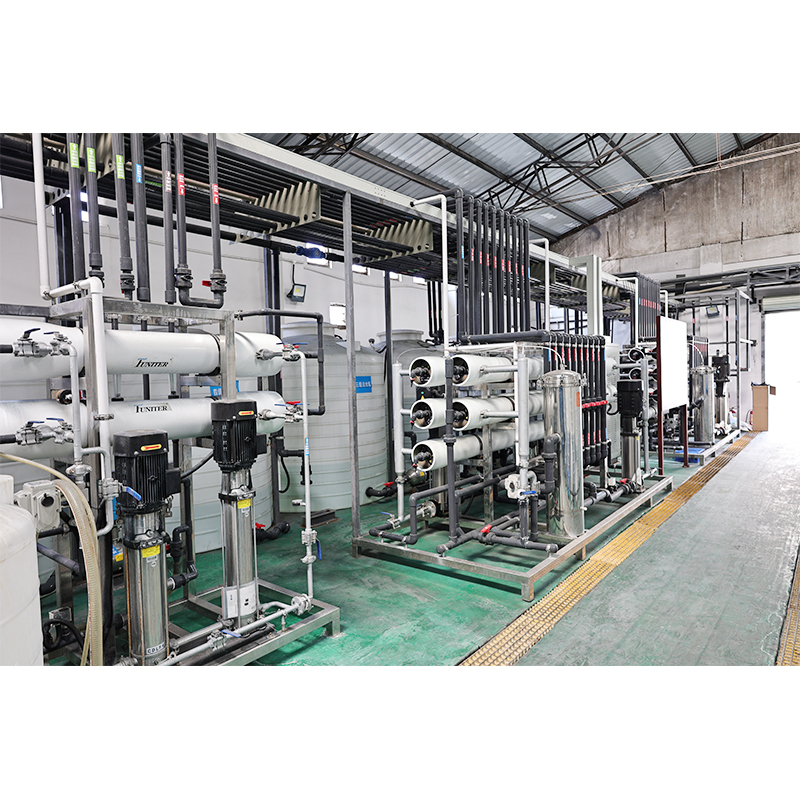
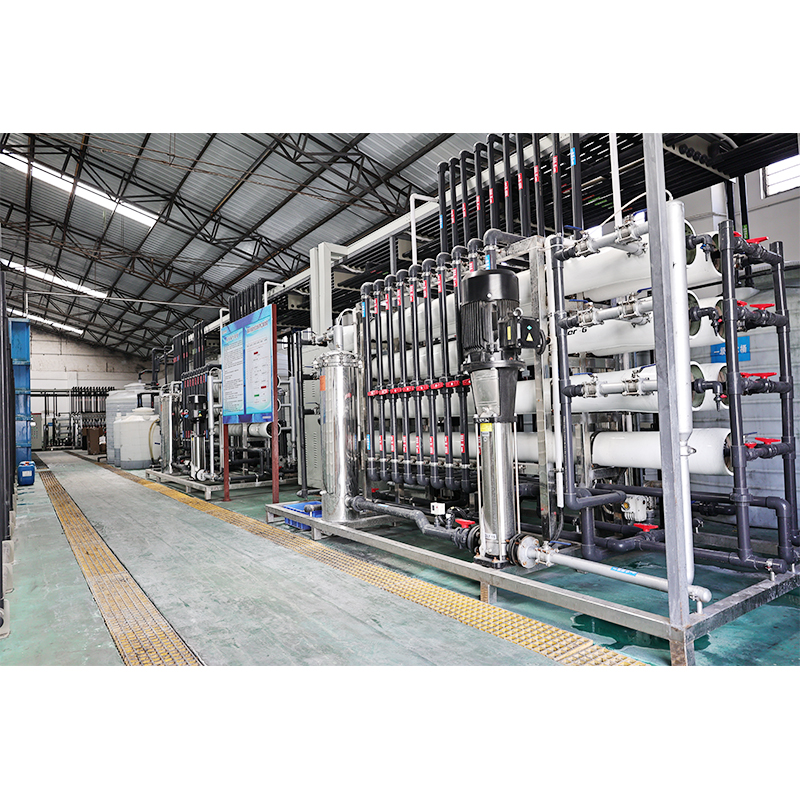
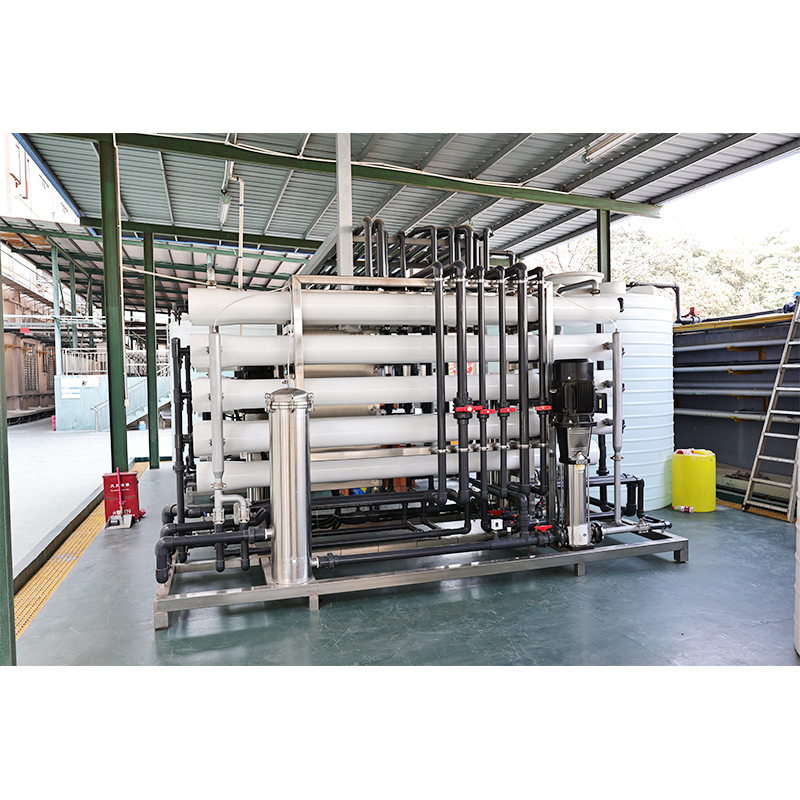
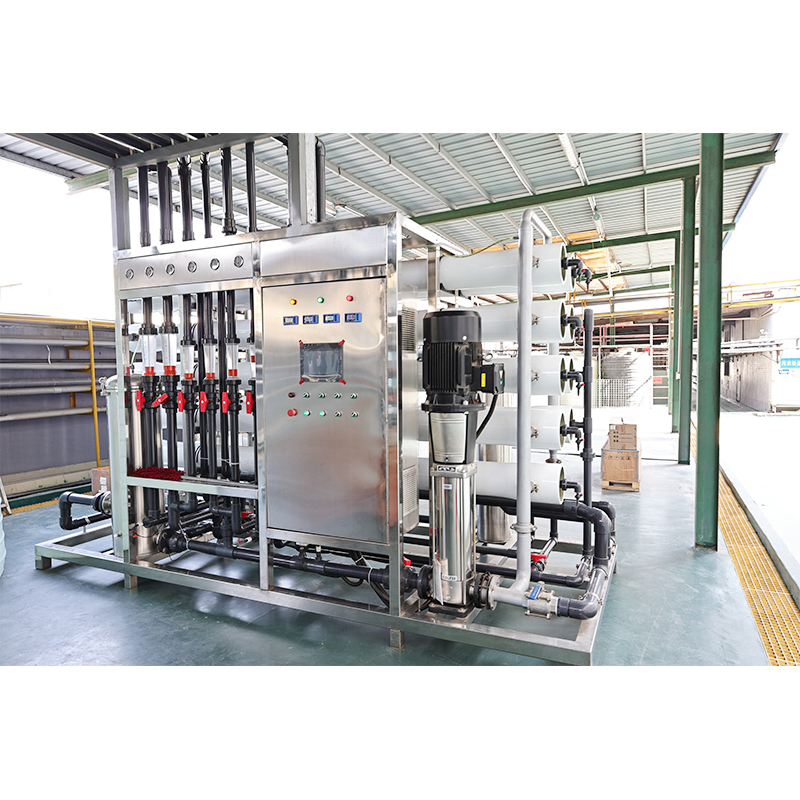


What are the key points of the pretreatment process for seawater industrial RO membranes?
Release Time : 2025-11-24
The pretreatment process for seawater industrial RO membranes is a core component ensuring the long-term stable operation of the system. Its core objective is to remove suspended solids, colloids, microorganisms, residual chlorine, and scaling ions from seawater through multi-stage treatment, providing the required feed water conditions for the reverse osmosis membrane. The rationality of the pretreatment process directly affects the membrane's lifespan, product water quality, and operating costs, requiring targeted design based on the characteristics of the seawater and the membrane elements.
Suspended solids and colloids in seawater are the primary targets for pretreatment. If these impurities are not effectively intercepted, they will clog membrane pores or scratch the membrane surface, leading to flux decline and reduced desalination rate. Pretreatment typically employs a combination of coagulation filtration and multi-stage sand filtration: coagulants (such as ferric chloride) are added to aggregate colloidal particles into larger flocs, which are then retained by a mechanical filter. Some projects also add microfiltration or ultrafiltration devices after sand filtration to further reduce turbidity to below 0.3 NTU, ensuring a SDI (Specialized Discharge Index) of less than 3, meeting the feed water requirements of the reverse osmosis membrane.
Removing residual chlorine and oxidizing agents is a crucial step in protecting membrane elements. While residual chlorine in seawater can inhibit microbial growth, it can oxidize the polyamide desalination layer of the reverse osmosis membrane, causing irreversible performance degradation. Therefore, a reducing agent (such as sodium bisulfite) must be added during pretreatment to reduce the residual chlorine concentration to below 0.05 mg/L. For systems using aromatic polyamide membranes, activated carbon filters or dosing devices are also required to completely eliminate free chlorine and other oxidizing agents through adsorption or chemical reactions.
Scale control is another key aspect of the pretreatment process. High concentrations of calcium, magnesium, and barium ions in seawater easily reach supersaturation during reverse osmosis concentration, forming insoluble scale such as calcium carbonate and calcium sulfate, which clog membrane channels and increase pressure drop. Pretreatment requires the addition of scale inhibitors (such as polyphosphates, organophosphates, or polyacrylic acids) to interfere with the crystal growth process and increase the solubility of scale-forming substances. Simultaneously, the pH value needs to be adjusted to the range of 7.0-7.5 based on water quality analysis to inhibit silica scale formation. For hard seawater, sodium ion exchangers or lime softening processes can be added to reduce the risk of scaling.
Microbial contamination control must be implemented throughout the entire pretreatment process. Bacteria, algae, and biofilm in seawater can adhere to the membrane surface, forming a biofilm, leading to decreased flux and increased pressure differential. Pretreatment requires chlorination, ultraviolet irradiation, or the addition of non-oxidizing bactericides (such as isothiazolinone) to kill microorganisms, and controlling the nutrient concentration in the feed water. In addition, security filters can intercept particles larger than 5 microns, preventing microorganisms from entering the reverse osmosis system. Regular chemical cleaning and disinfection of pretreatment equipment are also important measures to maintain stable system operation.
The pretreatment process must also consider the compatibility with different membrane elements. Spiral wound membranes have strict requirements for feed water turbidity and SDI, ensuring that the pretreated effluent meets standards; hollow fiber membranes are more sensitive to suspended solids content, requiring the addition of an ultrafiltration unit as a safeguard. For high-pressure reverse osmosis systems, pretreatment must also consider the matching of feed water temperature and pressure to avoid membrane element deformation or seal failure due to temperature differences. Furthermore, the materials used in pretreatment equipment (such as stainless steel and fiberglass) must be adapted to the corrosive environment of seawater to ensure long-term operational reliability.
The pretreatment process for seawater industrial RO membranes is a comprehensive system encompassing physical, chemical, and biological controls. Through the synergistic effect of key processes such as coagulation filtration, residual chlorine removal, scaling control, microbial control, and equipment adaptation, the operational stability and economic efficiency of reverse osmosis systems can be significantly improved. With the continuous advancement of membrane materials and pretreatment technologies, future pretreatment processes will develop towards higher efficiency and energy conservation, providing technical support for the sustainable development of the seawater desalination industry.